Got a car sitting on your drive that won't start? Don't assume it's worthless. I buy and collect non-running cars across Northern Ireland every week, and a flat battery, seized engine or failed MOT doesn't mean your car has no value. You don't need to start it, fix it, or move it. Get in touch, tell me what's wrong with it, and I'll arrange free collection with a recovery truck and winch, then pay you on the spot.
Here's the full process, step by step, so you know exactly what to expect before I arrive.
What Makes a Car a Non-Runner
A non-runner is simply a car that can't be driven under its own power. That might mean it won't turn over at all, it cranks but won't fire, or it starts and cuts out straight away. The specific reason doesn't matter - if the car can't be safely driven, I deal with it.
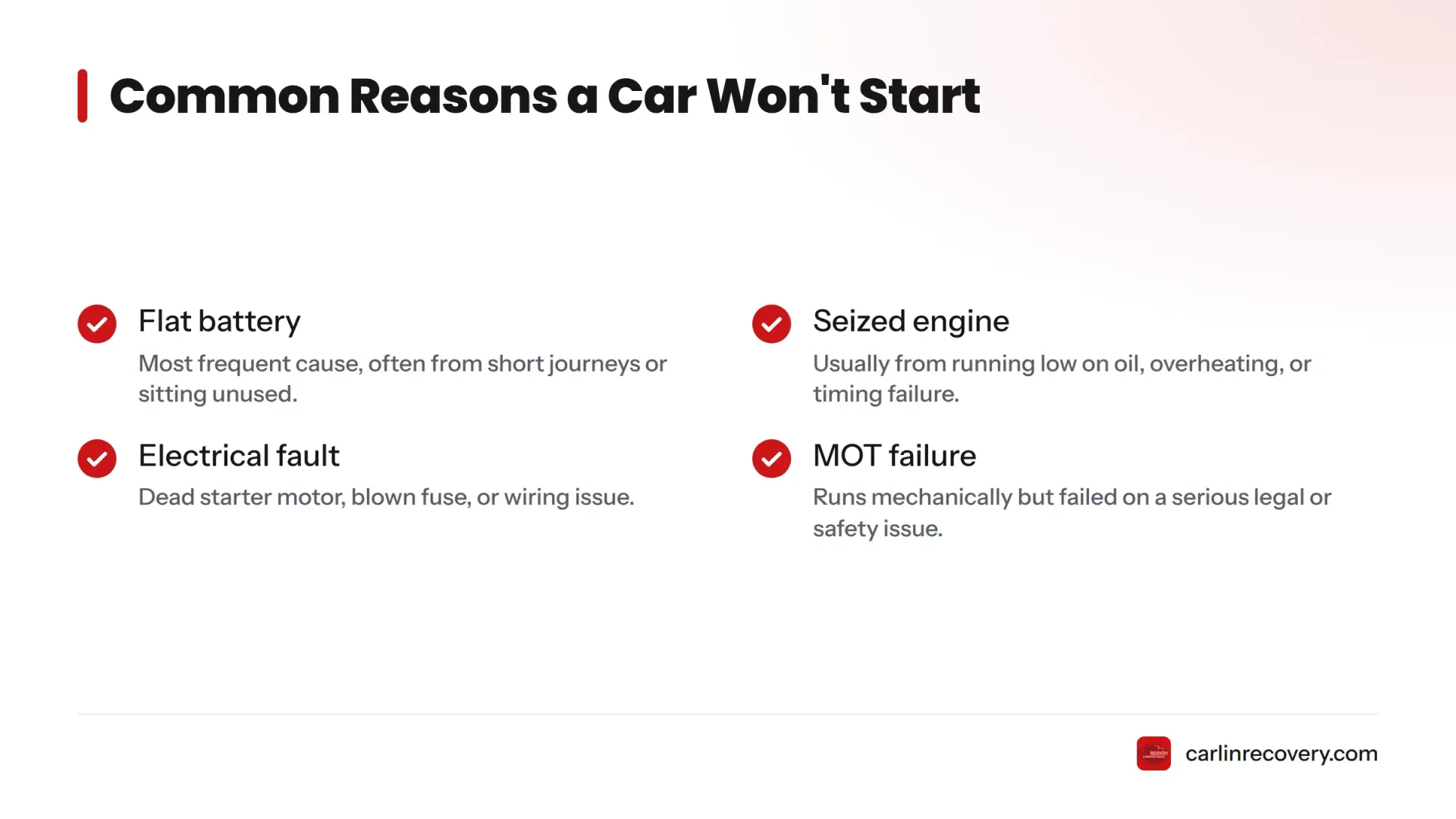
The most common causes I see are:
- Flat battery - by far the most frequent, often from short journeys, a parasitic drain, or sitting unused for weeks
- Seized engine - usually from running low on oil, overheating, or a timing component failing
- Electrical fault - a dead starter motor, blown fuse, or wiring issue
- MOT failure - the car might run mechanically but has failed on a fault serious enough that it's not legal or safe to drive
None of these reasons wipe out your car's value. Scrap value, parts value and resale value all still apply. Letting a non-running car rot on your drive is a waste when it can be collected and sold properly.
Step 1 - Gather Your Paperwork
The main document you need is the V5C logbook , the registration certificate proving you're the registered keeper. Have it ready when you get in touch - I'll need details from it to confirm the vehicle and arrange the sale.
If your V5C has gone missing, don't worry - it happens often, especially with cars that have been sitting unused. You can apply for a replacement through the GOV.UK V5C replacement service, though it takes a few weeks by post, so start early if possible.
When a non-runner is sold, the law requires the DVLA to be notified of the change of keeper. The GOV.UK guidance on selling, transferring or buying a vehicle covers exactly how this works, whether the car runs or not. I'll make sure the correct section of the V5C is completed and sent to the DVLA as part of the handover, so you're not left responsible for a car that's no longer yours.
Step 2 - Describe the Fault Honestly
Being upfront about what's wrong matters - both for fairness and because it helps me bring the right equipment. You don't need to be a mechanic. Simple, honest language is all I need:
- "It won't start at all, nothing happens when I turn the key"
- "It turns over but won't fire up"
- "The engine's seized, it won't turn at all"
- "It failed its MOT and I've left it sitting since"
- "The battery's flat and it's been sitting for months"
Tell me straight. I've heard it all, and there's no judgment. Giving me an accurate picture up front means less back-and-forth and a smoother collection day.
Step 3 - Confirm Your Details Over the Phone
Once you've described the fault, I'll ask for a few more details to get everything set up. That typically includes:
- Make, model and year
- Registration number
- Current location
- A brief description of the fault
- Your contact details and preferred collection area
This takes only a few minutes. No long forms, no need to send photos back and forth unless something unusual about the vehicle's condition needs clarifying.
Step 4 - Arrange a Collection Time
Once I have the details, we sort out a time that works for you. I cover Ballymena, County Antrim and roughly 60 miles beyond that across Northern Ireland, so I can usually reach you without much hassle.
The car needs to be somewhere I can legally and safely access with a recovery truck - a driveway, yard or other off-road location works perfectly. If it's on a public road, that's usually fine too, but let me know when we're arranging the time so I can plan the approach properly, especially with a winch involved.
Step 5 - The Collection Day
This is the part most people worry about unnecessarily. You don't need to start the car, move it, or do anything mechanical. That's the whole point of having a proper recovery truck with a winch.
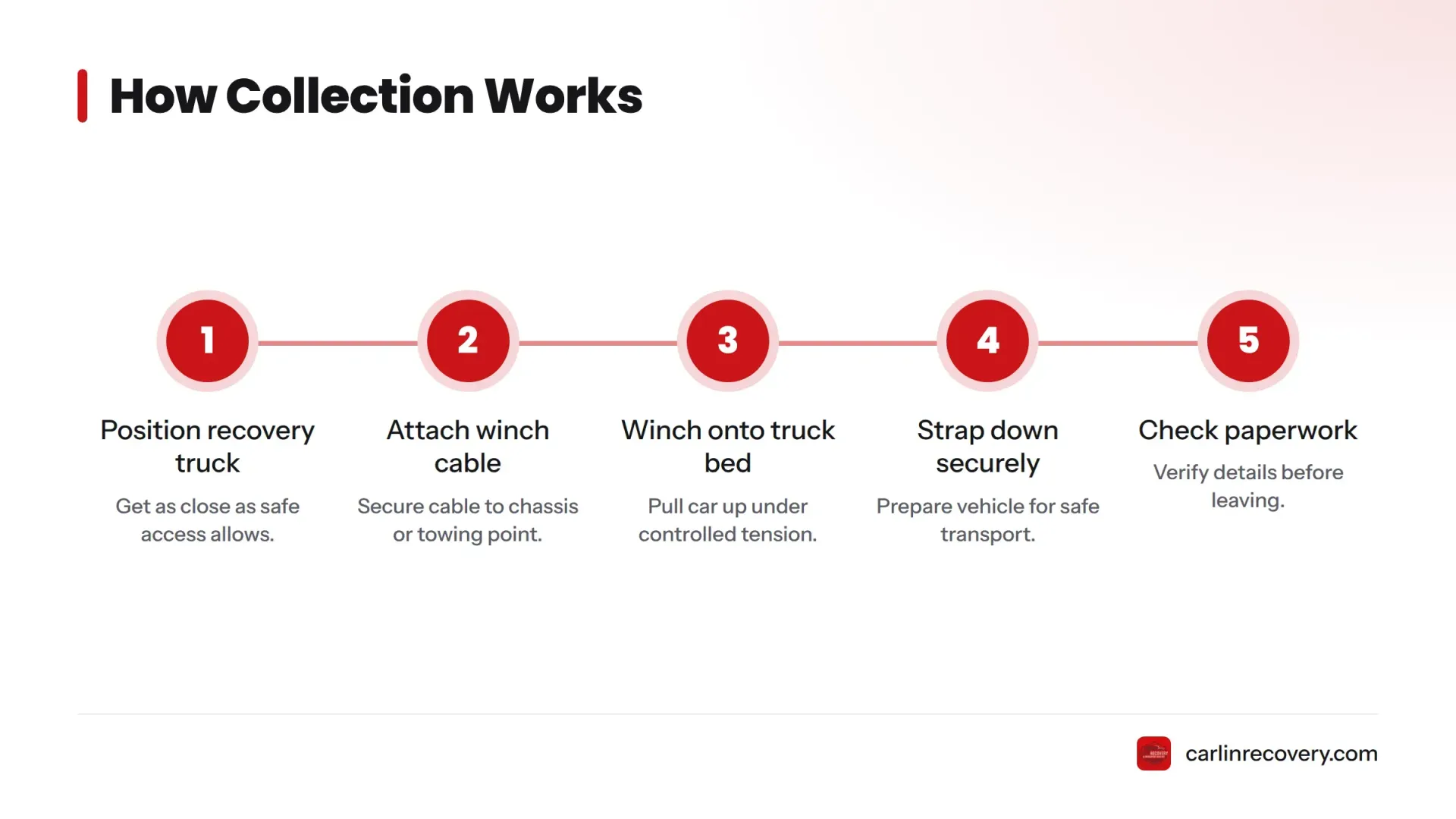
Here's how it works:
- I position the recovery truck as close as access allows
- The winch cable attaches securely to the vehicle's chassis or a suitable towing point
- The winch pulls the car onto the truck bed under controlled tension - no engine needed
- The car is strapped down securely for transport
- We check the paperwork and vehicle one final time before I leave
It's steady, careful work. The process is the same whether the issue is a flat battery, a seized engine, or something electrical. The winch doesn't care why the car won't start - it just needs a secure point to pull from.
Step 6 - Hand Over the Vehicle and Get Paid
Once the car's loaded and secure, we finish the paperwork together. That means signing the relevant section of the V5C logbook so the change of keeper is properly recorded, and handing over both sets of keys if you have them (one set is fine if that's all you've got).
Payment is in cash on the day, at the point of collection. No waiting for a bank transfer to clear, no chasing afterwards. You hand over the car and keys, I hand over the cash, and the job's done.
Before Collection Day
A few small things make collection day quicker and smoother:
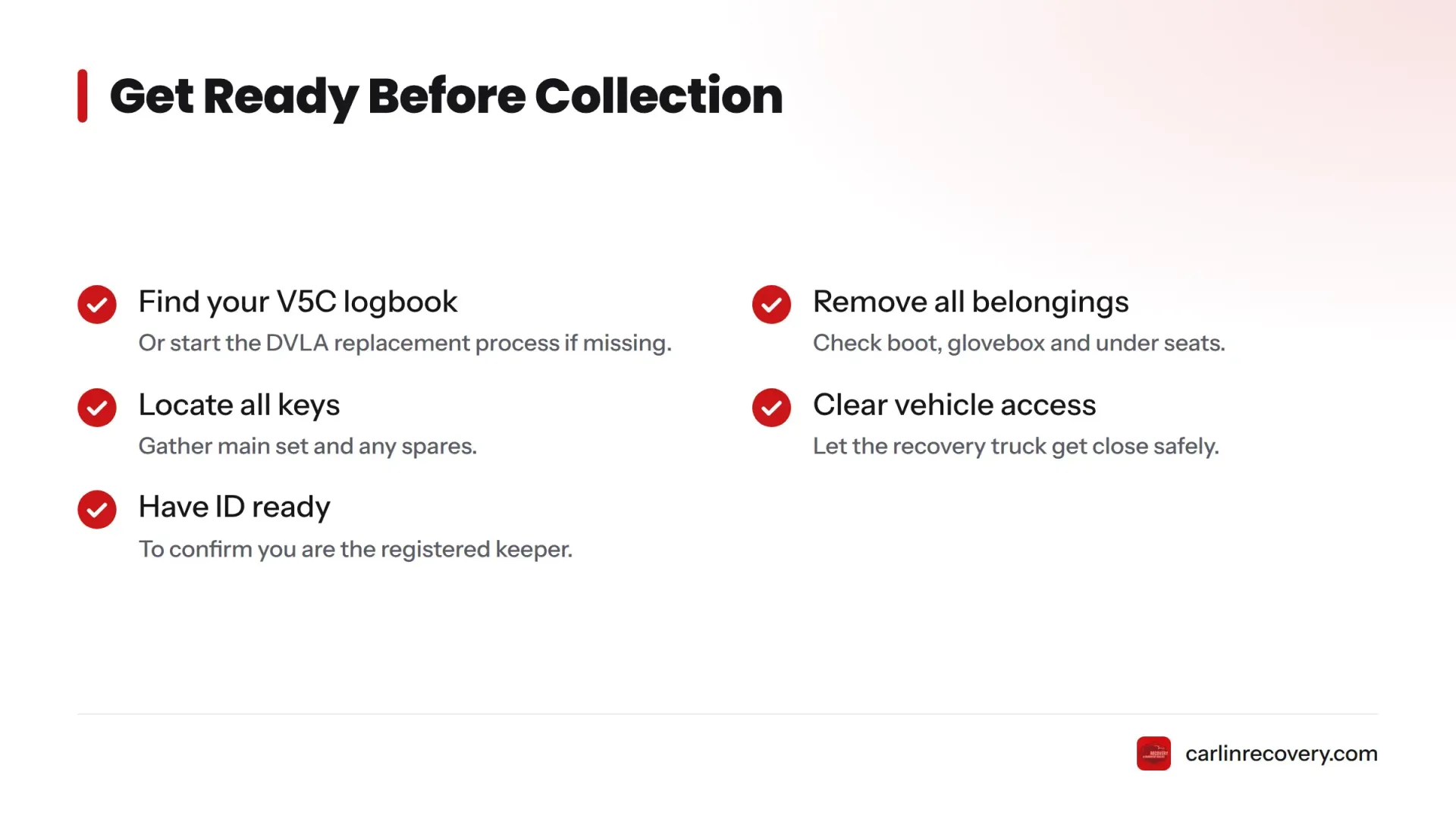
- Find your V5C logbook , or start the DVLA replacement process if it's missing
- Remove all personal belongings from the car, including the boot, glovebox and under the seats
- Locate all sets of keys , including spares if you still have them
- Clear access to the vehicle so the recovery truck can get close enough to winch it safely
- Have your ID ready in case it's needed to confirm you're the registered keeper
None of this takes long, but it makes a real difference to how quickly the job gets done once I arrive.
For more detail on how the collection and sale works, including the areas I cover, visit my free collection service for non-runners and unwanted vehicles. It's the same process described here, all in one place.
If you'd rather see the approach in action, this short video covers selling a car that won't start, step by step.
Frequently Asked Questions
What counts as a non-runner? Any car that can't be driven safely under its own power - whether it won't start at all, cuts out immediately, or is mechanically unsafe for the road.
Do I need the car to be driveable to sell it? No. I collect cars using a recovery truck and winch specifically because they can't be driven. A non-running car is still sellable.
What paperwork do I need to sell a non-running car? You need the V5C logbook so the change of keeper can be recorded correctly. If you've lost it, apply for a replacement through GOV.UK before collection day if possible.
Do I need to notify the DVLA when I sell a non-running car? Yes. The DVLA must be told whenever a vehicle changes hands, as explained in the official GOV.UK guidance on selling or transferring a vehicle. I handle this paperwork as part of the collection.
Does a failed MOT stop me selling the car? No. A failed MOT doesn't prevent you selling the car - it just means the car can't legally be driven on the road until the fault is fixed. That's exactly what recovery collection is for. Check the official GOV.UK MOT guidance for more detail on MOT rules.
Can the car be collected from a driveway? Yes. A driveway, yard or any off-road location is ideal for safe winch access. A public road location can usually be arranged too, as long as I know in advance.
Do I need to be there on collection day? It's best if you, or someone authorised to act for you, is there to hand over the keys, sign the paperwork and receive payment.
Is collection really free? Yes. Collection is offered free as part of the service. There's no charge for the recovery truck or winch work involved in getting the car off your property.
What happens to the keys when the car's collected? Hand over all sets of keys you have on the day. If you've only got one set left, that's fine - just let me know beforehand.
Selling a car that's given up on you doesn't need to be stressful. Get your paperwork together, give me an honest picture of the fault, and I'll take care of the rest with the recovery truck and winch - no starting required, no fuss, and cash in your hand before I drive away.
Sources
- GOV.UK: Selling, transferring or buying a vehicle
- GOV.UK: Get vehicle information from DVLA / replace a V5C
- Carlin Recovery & Transportation Services: homepage
Related: sell your car Northern Ireland